Why Every Vehicle Needs Insurance
What is Motor Insurance?
Motor Insurance is a contract between Vehicle Owner & Insurance Company in which Vehicle Owner pays Premium (price) in exchange of protection against financial losses arising from an accident or other damage to the vehicle. Why Motor Insurance?
Why Motor Insurance?
Motor Insurance covers Vehicle Owner and its Vehicle against any unforeseen events like accidents, natural calamities or theft and any unintentional damage caused to a Third party or their property.
BENEFITS OF
Comprehensive policy
We are happy to have a family of more than 10k customers.
Own Damage Cover
Protects against accidents, theft, fire.
Third-Party Liability
Covers injury or damage to third parties.
Personal Accident Cover
Financial protection for driver/owner.
Add-Ons
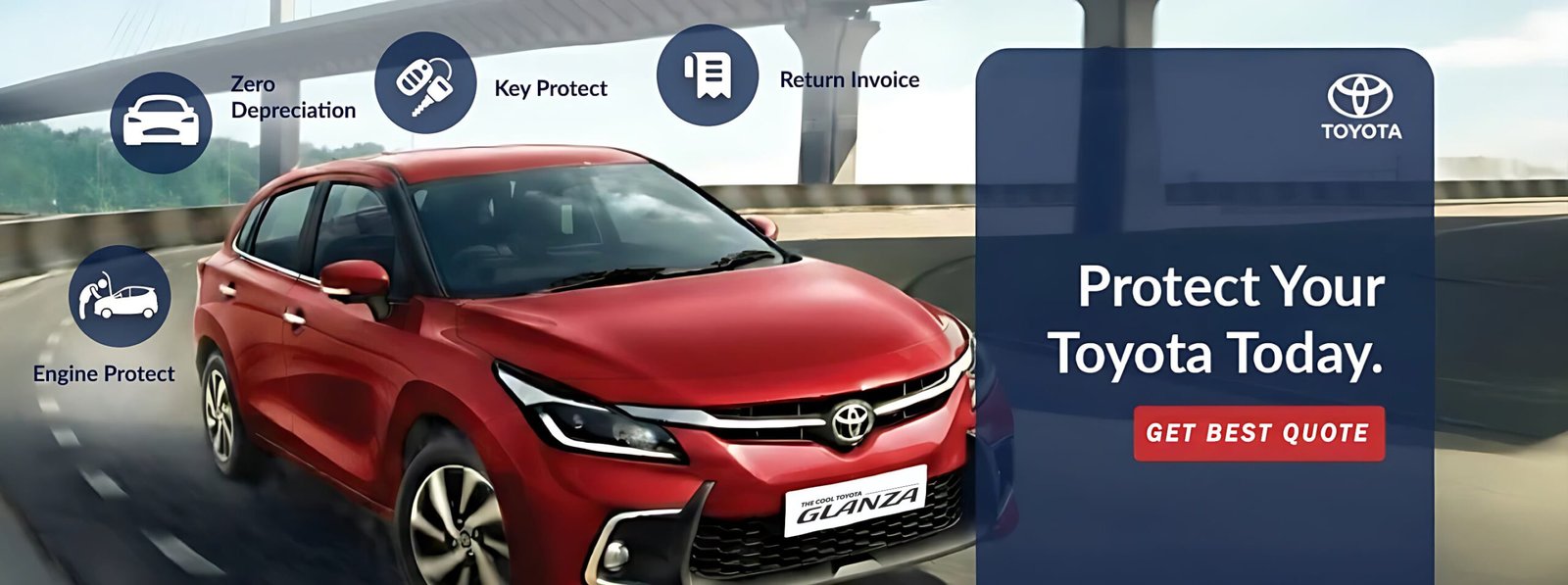
Zero Depreciation, Engine Protect, Roadside Assistance.
Why Choose Toyota Insurance
- Toyota Authorized Repairs
- Hassle-Free Claim Settlement
- 24×7 Roadside Support
- Genuine Toyota Part
FAQs
Is third-party insurance mandatory in India?
Yes. Third-party motor insurance is mandatory for all vehicles in India. It covers legal liabilities arising from injury, death, or property damage caused to a third party by the insured vehicle.
What is Zero Depreciation cover?
Zero Depreciation (Nil Depreciation) cover pays the depreciation value of parts replaced under an own Damage claim, ensuring higher claim settlement without deduction for depreciation.
Can I transfer my No-Claim Bonus (NCB)?
Yes. No-Claim Bonus can be transferred from your old policy to a new policy or insurer, provided there is no break in insurance and the vehicle ownership remains the same.
Things to check before buying motor insurance?
Before buying motor insurance, you should check your insurance requirement, IDV of the vehicle, add-on coverages, No Claim Bonus eligibility, third-party coverage, personal accident cover, network garages with cashless service, and policy terms and conditions.
What are the types of motor insurance
The main types of motor insurance are Stand-alone Own Damage Cover, Stand-alone Third-Party Cover, and Comprehensive Cover.
What are the do’s of MISP?
The do’s of MISP include offering customers a choice of policies, sharing premium rates transparently, ensuring POSP-certified staff, maintaining proper records, tracking grievances, and displaying required certificates and code of conduct.